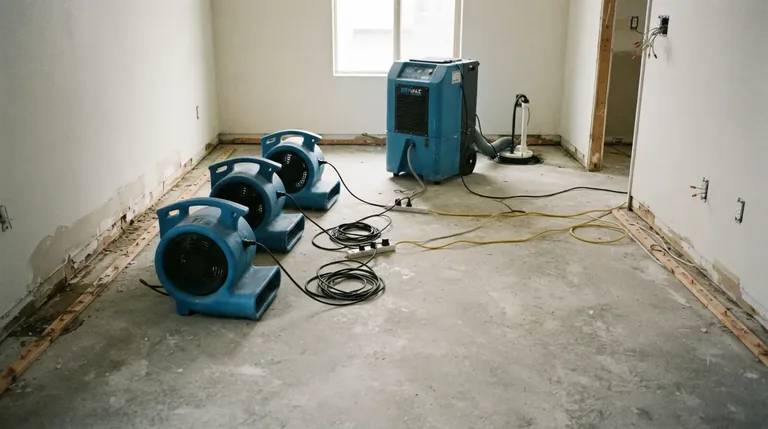
Water Damage Restoration Cost in Houston, TX
Insurance industry data puts the average water damage and freezing claim at $15,400, and your Houston bill depends on the water type, the affected area, and how long materials stayed wet.
Who to Call First in HoustonWhat Drives the Cost of Water Damage Restoration
Several things drive the size of a water damage bill: what kind of water it is, how much space it reached, which materials got wet, and how long those materials stayed wet before drying began. A small clean-water leak caught quickly costs far less than contaminated water that spread through several rooms unnoticed.
- Water type: clean supply water, used household ('gray') water, and water contaminated with sewage or floodwater ('black' water) call for different levels of cleaning, protective equipment, and disposal
- Affected area: the number of rooms and total square footage that got wet
- Materials: drywall, flooring, subfloor, insulation, and cabinetry each cost a different amount to dry, repair, or replace
- How long materials stayed wet: materials that stay wet longer are more likely to need replacement instead of drying in place
- Contents: furniture, electronics, and belongings add cleaning or replacement costs on top of repairs to the structure itself
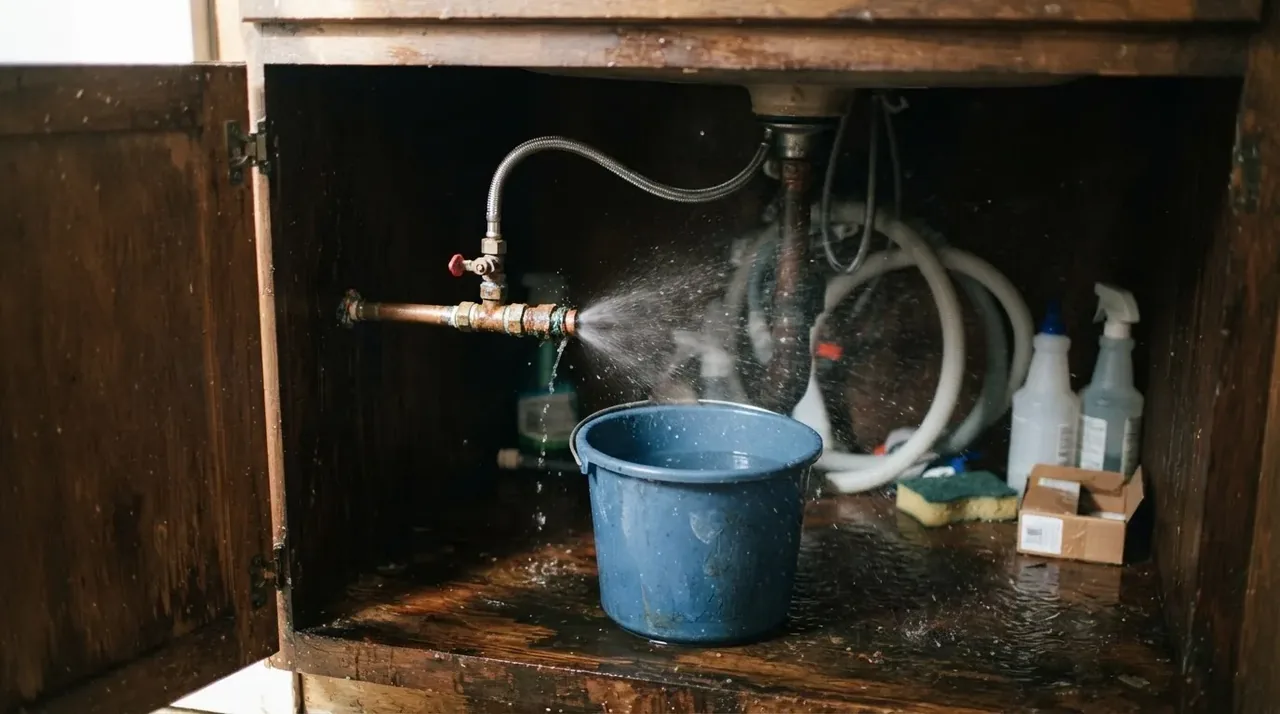
A sudden burst pipe that gets shut off quickly can affect less space and cleaner water than a slow leak that goes unnoticed for a while, which is part of why two jobs that look similar on the surface can price very differently.
For the broader picture of what to do before you reach the estimate stage, see the Houston water damage overview.
What Water Damage Restoration Typically Costs
Two national cost guides publish price ranges based on surveys of contractors and completed jobs, not official government statistics. According to Angi (2026), a water damage repair project nationally runs from $450 to $16,000, averaging $3,868. HomeAdvisor's cost guide (2025-2026) lists a typical range of $1,383 to $6,369, with the same national average of $3,868.
By Square Foot and Water Type
According to Angi (2026), per-square-foot pricing runs from $3 to $7.50 depending on the water category: about $3.50 for clean water, $5.25 for gray water, and $7.50 for water contaminated with sewage or floodwater.
Common Line Items
| Job | Source | Typical Range |
|---|---|---|
| Ceiling repair | HomeAdvisor's cost guide (2025-2026) | $450 to $1,600 |
| Plumbing repair | HomeAdvisor's cost guide (2025-2026) | $1,000 to $4,000 |
| Mold remediation | HomeAdvisor's cost guide (2025-2026) | $1,100 to $3,400, averaging $2,225 |
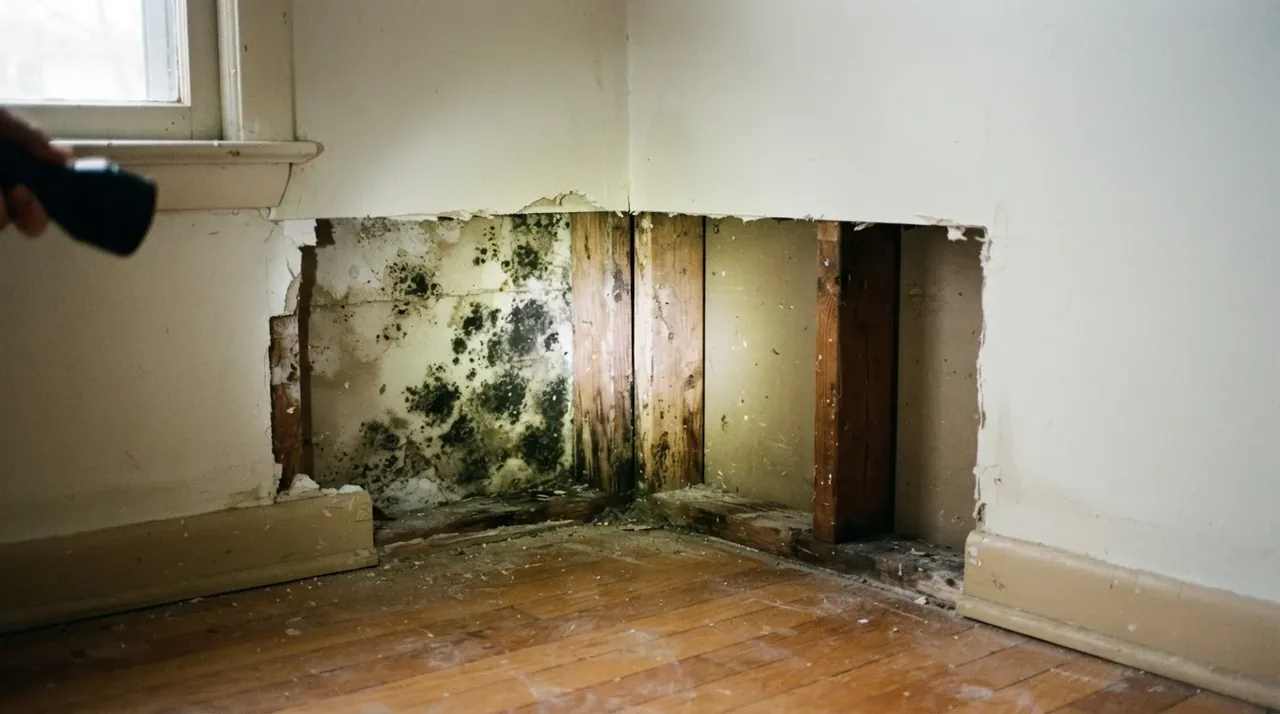
These are survey-based consumer cost guides built from contractor and project surveys, not official government statistics, and the wide ranges reflect how much a single job can vary. See mold growth after water damage for what raises the chance that mold remediation becomes part of the job at all.
What Official Data Shows About Water Damage Losses
Official insurance and federal figures give a different picture than consumer surveys: measured claims and modeled damage scenarios from government and industry sources, not numbers collected from contractor surveys. These figures describe national or program-wide averages, not a specific bid for your Houston home.
The Insurance Information Institute and ISO track homeowners claims nationally. Their Average Homeowners Losses, 2019-2023 table, published by the Insurance Information Institute, lists water damage and freezing at 1.50 claims per 100 insured homes (house-years), with an average severity of $15,400 per claim.
| Source | What It Measures | Figure | Checked |
|---|---|---|---|
| Insurance Information Institute / ISO, Average Homeowners Losses 2019-2023 | Water damage and freezing claims, nationally | 1.50 claims per 100 insured homes; average severity $15,400 | September 2026 |
| FEMA, FloodSmart flyer (2023) | Damage from 1 inch of floodwater, average-sized home | About $25,000 | September 2026 |
| FEMA, Flood Insurance and the NFIP (2021) | Damage from 1 inch of floodwater, 1,000-sq-ft one-story home | About $11,000 | September 2026 |
| Texas Department of Insurance, Winter Storm Uri report (snapshot, data as of March 31, 2022) | Average incurred loss, residential property, whole event | About $17,600 | September 2026 |
| FEMA / NFIP | Building and contents coverage limits | $250,000 building; $100,000 contents | September 2026 |
FEMA publishes two separate damage estimates by water depth, and they describe two different homes. According to a 2023 FEMA FloodSmart flyer, just one inch of floodwater can cause about $25,000 in damage to an average-sized home. A separate document, FEMA's Flood Insurance and the NFIP (June 14, 2021), breaks the damage down by depth for a smaller, 1,000-square-foot one-story home: 1 inch of water causes about $11,000 in damage, 3 inches causes $12,000, 6 inches causes $21,000, and 18 inches or more causes $30,000.
A Texas Department of Insurance report on Winter Storm Uri, an interim snapshot with data as of March 31, 2022, is the closest official look at a Texas freeze-and-water event overall. It counted 510,772 claims across all lines of insurance — property, auto, and other coverage combined, not water damage by itself — with about $11.2 billion in expected losses and $8.3 billion paid out at that point. The average incurred loss on residential property claims for the whole event, which combined freeze, water, ice, snow, wind, and power-loss damage together, was about $17,600. TDI notes this is an interim snapshot, not a final count.
How Pricing and Insurance Coverage Work Together
Two forces set your final bill: how a provider or insurer calculates the price of the work, and how much of that price your policy actually pays. Understanding both helps you make sense of an estimate instead of just reacting to the total at the bottom.
How Insurers and Restoration Companies Set Prices
Xactimate, built by Verisk, provides localized price lists for more than 460 markets across the U.S. and Canada, with labor rates updated monthly. No public regional price-list figures are available.
What Your Policy Usually Covers
According to the Texas Department of Insurance, a standard homeowners policy usually covers a sudden and accidental discharge of water, such as a pipe that suddenly bursts. Flood and continuous leakage are usually excluded; mold is usually excluded, except repair tied to a covered loss. Your specific policy wording controls what is and is not paid, so read your declarations page rather than assume. This page offers general information, not legal or insurance advice. See the Texas water damage insurance claim guide for the deadlines that apply once you file.
Read your own declarations page for the exact perils, exclusions, and deductible on your policy. That document controls your specific claim more than any general summary on this page.
NFIP Limits and Your Deductible
Most standard homeowners policies generally exclude flood; flood insurance is a separate policy. NFIP coverage limits are $250,000 for the building and $100,000 for contents. Any claim payment is subject to your policy's deductible, so check your declarations page for the figure that applies to you. See the flood damage restoration guide for Houston for what happens after the water recedes.
If you rent your home, tell your landlord about the damage in writing right away. Your renters policy generally covers your own belongings, not repairs to the building itself.
How to Read an Estimate and What to Ask a Provider
A clear estimate breaks the job into line items — the rooms affected, the materials involved, and the equipment or labor needed for each one — rather than a single lump number. Before you agree to anything, ask a provider a short list of questions about how the price was built and what it covers.
- Ask which price list and revision date the estimate uses
- Ask whether mitigation (drying) and repair are priced separately
- Ask what happens to the price if more damage or mold turns up once work starts
- Ask for the scope of work in writing before you sign anything
- Ask the provider for proof of insurance and any trade license the specific job requires
Comparing more than one estimate, when you have time to do so, makes it easier to see whether a price matches the visible damage. For the first steps to take and who to call before you reach this stage, start with the Houston flood zones and water shut-off guide.
If That Did Not Work
If two estimates come back with very different numbers, or your insurer's adjuster estimate does not match a provider's estimate for the same damage, you have more than one way to work through the gap: ask for an explanation, get a second opinion, or escalate to the state regulator.
- Try again: ask the provider or adjuster to walk through the estimate line by line and explain what each price code took into account
- Try another route: get a second estimate from another provider, or ask your insurer for a re-inspection if the adjuster's number seems out of line with the visible damage
- Contact the regulator: if you believe your insurer is mishandling the claim itself, file a complaint with the Texas Department of Insurance at 800-252-3439, staffed 8:00 a.m. to 5:00 p.m. Central time, Monday through Friday
What Changed on This Page
- September 2026: page published; phone numbers and legal deadlines checked against the official sources linked above.
Frequently Asked Questions
How much does water damage restoration cost in Houston? ▾
What is the average cost per square foot for water damage restoration? ▾
Does my homeowners insurance cover the cost of water damage restoration? ▾
How much does the National Flood Insurance Program pay for flood damage? ▾
Why do restoration companies not publish a price list? ▾
What did the Texas Department of Insurance report about Winter Storm Uri? ▾
What should I ask a provider before agreeing to an estimate? ▾
Do I need more than one estimate? ▾
Water in your home right now?
See who to call first in Houston, how to reach your water provider, and how to check your flood zone.
Who to Call First in Houston